Weight Loss After 40 Feels Different
The old playbook does not always work the same way after 40. You can eat a little better, walk more, hit the gym for a few weeks, and still feel like the scale barely moves. That does not mean you are stuck — it just means the strategy may need to change.

You can eat a little better, walk more, hit the gym for a few weeks, and still feel like the scale barely moves. For many men, weight loss gets harder because of a mix of lower activity, poor sleep, stress, slower recovery, less muscle, and metabolic changes that happen quietly over a decade.
That does not mean you are stuck. It just means the strategy may need to change.
Why weight loss actually gets harder after 40
It is not in your head, and it is not just "getting older" as a vague explanation. Several concrete things shift at once:
- Muscle mass declines starting in your 40s if you are not actively working against it, and muscle is metabolically active tissue — less of it means a lower resting calorie burn.
- Testosterone gradually falls, which affects energy, motivation to train, and the body's tendency to store fat versus build muscle.
- Sleep quality often declines, and poor sleep independently drives hunger hormones in the wrong direction the very next day.
- Insulin sensitivity worsens, meaning the same meal has a bigger blood sugar impact than it did at 25.
- Chronic stress and cortisol tend to climb in the demanding middle years of a career and family life, which encourages fat storage specifically around the midsection.
Each of these compounds the others. That is why the exact plan that worked at 28 can quietly stop working at 45, even with the same effort.
Why men are looking at GLP-1s
GLP-1 medications like semaglutide and tirzepatide have changed the weight loss conversation. They are commonly discussed because they may help eligible patients with appetite, fullness, and weight management when used under the guidance of a licensed healthcare provider.
For men over 40, the interest is usually simple:
- More control over appetite
- Less belly fat
- Better energy
- Easier movement
- Less joint strain
- Better confidence
- A real reset after years of starting and stopping
GLP-1s are not magic, and they are not for everyone. But they may be worth learning about if weight loss has become harder than it used to be.
What starting treatment typically looks like
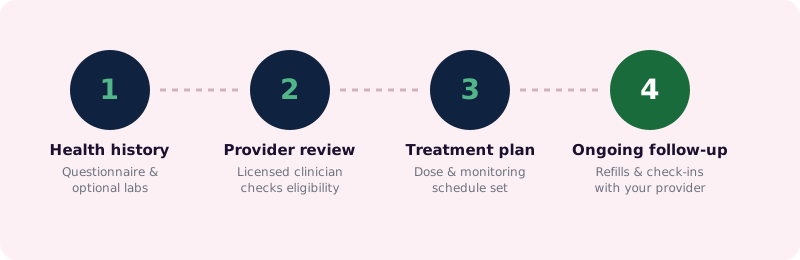
What GLP-1s do and don't do
| What they may help with | What they are not |
|---|---|
| Reducing appetite and food noise | A replacement for resistance training |
| Increasing feelings of fullness after meals | Guaranteed to work identically for every patient |
| Supporting meaningful weight loss alongside lifestyle changes | Risk-free — side effects and eligibility must be reviewed by a provider |
| Giving a real "reset" after repeated diet failures | A one-time fix without ongoing monitoring |
Ready when you are
See if you're a candidate for online care
A licensed provider reviews your information and lets you know your options — no obligation to continue.
Start an online visitWhat to ask before choosing online care
Before starting any online weight loss program, ask:
- Is a licensed provider reviewing my information?
- Am I actually a candidate?
- Are labs needed?
- What side effects should I understand?
- What does the monthly cost include?
- Is this a subscription?
- How do refills and follow-ups work?
- What happens if the medication is not right for me?
A good provider should make the process clear, not rushed.
Building the habits that make medication work better
Whether or not you pursue medication, the fundamentals that make any weight loss strategy stick after 40 are the same: prioritizing sleep as seriously as diet, adding resistance training to preserve muscle rather than just cutting calories, and managing stress and alcohol intake, both of which quietly work against the scale. Medication can remove one major obstacle — appetite — but it works best layered on top of these habits, not instead of them.
Start with better information
Weight loss is not just about looking better. It can affect your energy, sleep, mobility, confidence, blood pressure, workouts, and long-term health. If you are ready to understand your options, the next step is simple — talk to a licensed provider who can review your history and tell you honestly whether you're a candidate.
Frequently Asked Questions
Why is it harder to lose weight after 40 than it was in my 20s?
Several changes compound at once after 40: muscle mass and testosterone gradually decline, sleep quality often worsens, insulin sensitivity drops, and stress-related cortisol tends to rise. Each of these independently makes fat loss harder, so the same routine that worked at 25 often needs to change.
How do GLP-1 medications like semaglutide help with weight loss?
GLP-1 medications may help reduce appetite and increase feelings of fullness, which can make it easier to sustain a calorie deficit. They are prescription medications intended to be used under a licensed provider's guidance and work best alongside changes to diet, sleep, and activity, not as a standalone fix.
Are GLP-1 medications safe for everyone?
No. Eligibility depends on your medical history, current medications, and specific health conditions, which is why a licensed provider reviews your case, and sometimes labs, before prescribing. Side effects and contraindications vary by individual, so this decision should never be made without proper medical evaluation.
Is a subscription required for online weight loss treatment?
It depends on the platform. Some structure GLP-1 treatment as an ongoing subscription that includes medication, monitoring, and follow-ups, while others bill per visit. Always ask upfront exactly what's included in the price and whether you can pause or cancel easily.
Do I still need to exercise and eat well if I'm on a GLP-1 medication?
Yes. GLP-1 medications can reduce appetite, but preserving muscle mass through resistance training and prioritizing sleep and protein intake meaningfully affects both how well the medication works and how you feel during treatment. Medication and lifestyle changes work best together, not as substitutes for each other.
Medications discussed in this guide
Educational overviews — dosing, side effects, cost and how to talk to a provider.